Know About Water Filter Pitchers

Whether we drink from a plastic bottle or a kitchen faucet, we expect clean, crisp water. But headlines about toxic lead and chlorine remind us that our water supply doesn’t always flow fresh from cascading mountain waterfalls. Do we really know how safe our drinking water is?

 Lead is a heavy metal that leaches from corroding water lines and home plumbing fixtures. It’s unsafe at any level. Chlorine is used to kill germs in water systems, but disinfection byproducts can also pose a health threat. Chlorine is tied to higher incidences of cancer, especially in rural and low-income areas.Water filter pitchers aren’t a magic fix, but many can reduce lead, chlorine, and unpleasant tastes or smells.

Pitchers are the second-most preferred type of water filter after those built into refrigerators And they’re relatively inexpensive, typically less than $40, and easy to use. Just fill them at the tap and wait for the water to flow through the cartridge.

1. Filters Can Make Water Taste and Smell Better

Compounds and chemicals such as zinc, chlorine, and hydrogen sulfide can make your water have a metallic flavor or smell like sewage.Most models are quite effective with flavor and odor reduction.

2. All Water Filter Pitchers Are Different

No filter does it all. Some pitchers remove bad-tasting contaminants like chlorine, zinc, and hydrogen sulfide. Others remove lead. If a pitcher does filter out lead—or other contaminants such as volatile organic compounds, heavy metals, pharmaceuticals, and hormones—the packaging should cite a separate certification mark for each. If your water contains serious contaminants, a water pitcher filter might not be enough to mitigate the problem. You might need a more comprehensive filtration system.

3.Replacement Filters

Manufacturer instructions will tell you how often to change the filter. Usually, it’s every two months or 40 gallons, whichever comes first. You’ll want to follow those guidelines because filters clogged with particulates simply stop working. Also, the activated carbon in filters that traps flavors and odors has a finite capacity to absorb them before it stops functioning.If you notice water flowing slowly from your pitcher, it’s likely that the filter is clogged and it’s time to replace it. Some water filter pitchers have a filter-life indicator that tells you when it’s time for a replacement.

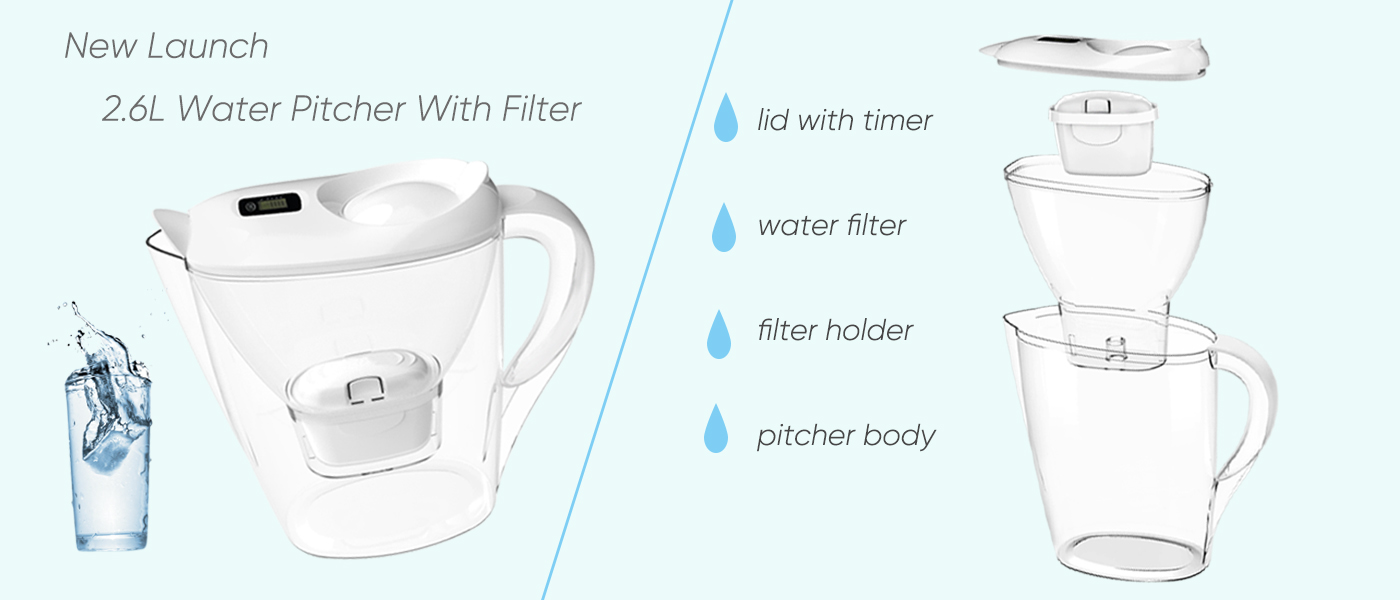
Pursafet water filter pitcher system offers purer, safer and greater tasting water for your every day life.
Do you know How Ion Exchange Works

In the water softening process, the resin with positively charged sodium ions will capture the scale-forming positively charged calcium and magnesium ions in water and release the sodium ions to the water for exchange.

While for the deionization process, it can either exchange positively charged ions (cations) or negatively charged ions (anions).

In the anion exchange process, the negatively charged ions in water like fluoride, arsenic, nitrate, uranium, sulfate, and more get removed and exchanged with other desirable negatively charged ions like chloride (CI‾).

And when the ion-exchange resin capacity is fully used up, it will be undergoing a process called regeneration to restore the initial condition in the IX resin using regenerant like sodium chloride solution and hydrochloric acid.

The water softening and deionization is often used in water filtration system at home together with other filtration technologies like Reverse Osmosis (RO) and Activated Carbon.

The ion exchange process is effective in removing dissolved inorganic contaminants but weak against organic contaminants and microorganisms.

The Advantages of Ion-Exchange Method:

  1. Inexpensive
  2. Effective against dissolved inorganics contaminants
  3. Able to remove arsenic, fluoride, nitrates, sulfates, uranium, and more negatively charged contaminants
  4. Able to remove manganese, iron, chromium, magnesium, calcium, and more positively charged contaminants
  5. Regenerable for continuous usage

The Disadvantages of Ion Exchange Method:

  1. Cannot remove sediments, organic contaminants, and microorganisms
  2. The Ion-Exchange (IX) resin is vulnerable to bacterial growth
  3. High operating cost

Pursafet ‘s coffee machine water filters are with none sodium ion-exchange resin and coconut shell activated carbon granular filter media, which could help to reduce chlorine, taste , odor, prevent limscale to build-up to extend the coffee machine life.

Please check https://atomic-temporary-161001700.wpcomstaging.com/catalogue/coffee-machine-water-filter/ for details.

About The Water Filtration At Home

1. What’s the ideal pH level of tap water?

The Ideal pH level of tap water is 7.5. The pH level between 7.0 and 8.0 is preferable because if the tap water pH level is below 7.0, the acidity may cause corrosion to pipes, appliances, and fixtures. If the pH level is above 8.0, the alkalinity may produce minerals deposits inside the pipes and on floors.

2. What are the common type of water filtration system in the market?

The common type of water filtration system in the market are sediment filter, activated carbon block filter, granular activated carbon filter, reverse osmosis filter, distillation, ion-exchange, ultraviolet disinfection, ultra filtration, activated alumina filtration, and ionization.

3. How long you need to replace your water filter cartridge?

It depends on the water filter capacity and family usage.

For most standard capacity activated carbon filter, it should be replaced at least once every year.

Reverse Osmosis membrane filter can last up to 3 years due to its self-wash mechanism.

Sediment filter like Polypropylene (PP) should be replaced more frequently, typically from 3 to 12 months time depending on usage.

Most of the time, the filter will come with a certain capacity in gallons, so you can find out your average monthly water usage and calculate the replacement period accordingly.

4. How to know whether the filter cartridge is clogged?

You can measure the pressure drop by installing pressure gauges before and after the filter.

When the filter cartridge is new, run the water filtration system and write down the difference of pressure reading (let’s say 2 psi). Then measure again after a few months, you’ll notice the pressure difference is increasing, let’s say to 7 psi.

When the difference of 2 pressure gauges reading reach about 15, it’s time to change the filter cartridge (or wash if it’s washable).

5. How to choose the right filter that can remove the contaminants in my water source?

The best way is to have your water tested on lab to identify the contaminants, and then pick the right water filters to remove those contaminants.

6. Can a TDS meter really measure the Total Dissolved Solids in the water?

The answer is no.

We have seen many people used a TDS meter or TDS pen to measure Total Dissolved Solids in their water without knowing what is really being measured.

In short, what TDS meter measured is the electrical conductivity (EC) in water (pure H2O has virtually zero EC), and then times the EC value by a factor between 0.5 to 1 (set by the manufacturer) to estimates the TDS (which is not the real Total Dissolved Solids in water).

For instances, dissolved organic solids (eg: sugar) and microscopic solid particles (eg: colloids) are not measurable by the TDS meter because they do not affect the water conductivity significantly.

The accurate way to measure the actual TDS in water is to evaporate the water and then weighing the dissolved residue left.

7. Is the water filter brand important?

Not absolutely but is recommended if it’s a highly reputable brand in term of product safety, quality control and customer support.

The important parts of considering a water filter are about the material of the components, where the components are manufactured, and the functionality of the filter system.

Pursafet carbon block water filters, refrigerator water filters, pitcher water filters, coffee machine water filters and POU water filter system are manufactured with NSF/WQA/FDA certified raw materials, 100% testing before shipping to customers’ s hand. Welcome to send inquiries.

Activated Carbon Block Filtration

The Activated  Carbon Block  is composed of fine carbon powder that held together and remains static by a binding agent.

It’s very effective in removing Chlorine taste and odor, chemicals, and more contaminants in water.

Also, the Activated Carbon Block is able to reduce contaminants like lead, volatile organic compounds (VOCs), and microscopic cysts in water.

The high porosity powder form resulting in a larger surface area, which allows it to adsorb more contaminants in water and prevent water from channeling.

It also has high resistance against bacterial growth due to the tiny pore size.

How Activated Carbon Block Filter Works

When the water flows through the pores of an activated carbon block, all the impurities with size larger than the size of the pores are mechanically adsorb and accumulate on the activated carbon surface.

At the same time, the positively charged activated carbon attracts all the negatively charged chemicals like Chlorine and get rid of the bad taste and odor.

The Advantages of Activated Carbon Block Filtration

Affordable price and high value (performance-to-cost ratio)

Great contaminants filtration capability

Very effective in removing Chlorine taste and odor

Customizable for different designs and applications

Good water flow rate

Long filter life

Retain essential minerals

Minimal pH level change

Inhibit bacterial growth

Easily to be used in conjunction with other filtration technologies for greater filtration

Doesn’t require a power supply

Green technology

No chemical additives

Pursafet’s activated carbon blocks are made from coconut shell based carbon materials. It delivers an unmactched purity and micro pore volume than other carbon sources, like coal or wood. A higher micro pore volume translates to an increased surface area and porosity for greater adsorption.

Pursafet activated carbon blocks

New Refrigerator Filter Launched

The new compatible SAMSUNG DA29-10105J inline refrigerator water filter has launched.

Material use with coconut shell activated carbon block inside and PP cover shell.

Removes over 99% of potentially harmful contaminants that may be in the water.

Deliver unequaled filtration performance, high chlorine taste, and odor reduction, while leaving the beneficial minerals intact.

Start to enjoy the Purer, Healthier, and Greater tasting filtered drinking water every day.

More details, Please visit below link:

https://www.alibaba.com/product-detail/Inline-water-filter-cartridge-for-refrigerator_1600086185204.html?spm=a2700.galleryofferlist.0.0.76c13d68ex49k0

The difference between Compressed Carbon Block and Extruded Carbon Block

Carbon Blocks, are one of the most effective and widely used technologies in the Point Of Use (POU) drinking water treatment industry. Solid carbon blocks, or simply carbon blocks, are employed either as standalone treatment methods or in conjunction with other filtration technologies. While seemingly simple at first glance, there are many factors to evaluate when designing and manufacturing an efficient carbon block water filter.

The Manufacturing Processes:Compressed Carbon Block VS. Extruded Carbon Block

Carbon block is manufactured using one of two processes: extrusion or compression molding.

Extruded carbon blocks are manufactured using a mixture of carbon, binder and other media that is forced through a die to form a continuous block. The block is then trimmed to size.

Compressed carbon blocks are manufactured individually in a mold under great pressure and high heat and then trimmed to size.Compression molding utilizes a more labor intensive manufacturing process with a lower production rate.

However,compression molding also provides a final product with more consistent filtration properties, due somewhat to needing less binder material to manufacture a cohesive carbon block.

Beyond simply requiring less binder, another advantage of compression molding over extrusion is the broader array of binding materials from which to choose.

Due to the greater temperatures and pressures employed in the compression molding process, specially formulated binders that are more porous may be used to prevent the binder from masking the carbon’s inherent porosity. This yields a more efficient use of the material, resulting in superior performance and increased capacity when comparing same sized blocks.

One final difference between the two manufacturing processes is that compression molding of carbon blocks provides more variability in filter shape, which adds greater flexibility to product design. Carbon block filters go beyond the aesthetic improvement of water by reducing particulates, microscopic cysts, lead, volatile organic chemicals (VOCs), and other contaminants.

Pursafet’s Carbon Blocks

All of Pursafet’s carbon blocks are for the compressed type carbon blocks with all the specified advantages. We own a 7000 square meters carbon block manufacturing facility, the carbon block annual production capacity reaches 5 million pieces of both standard and customized size to meet your different requirement.

You may check the following for more details:

carbon-block1

Water Pollution & Water Filtration

pure water

Water pollution occurs when unwanted materials enter into water, changes the quality of water and and harmful to environment and human health.

Water is an important natural resource used for drinking and other developmental purposes in our lives.Safe drinking water is necessary for human health all over the world.

According to world health organization (WHO) 80% diseases are water borne. Drinking water in various countries does not meet WHO standards, 3.1% deaths occur due to the unhygienic and poor quality of water.

Usually, there are 3 types of contaminants in our daily drinking water.

1.Physical contaminants: refers to the sediment, rust and impurities such as suspended solids visible in the water.

2.Chemical contaminants: refers to various artificial or naturally occurring chemicals that are dissolved in water, organics,in-organics and heavy metals.

3.Biological contaminants: refers to a biologically active substances that can cause disease to human body in water,the bacteria, viruses and parasites.

Sourcing the clean and safe drinking water becomes more and more important for each of family. Here are some water filtration media that can help to improve the drinking water quality.

·Polypropylene Sediment water filter: Filtering suspended matter, rust and other impurities.

·Activated Carbon water filter: Remove chlorine, odor, taste voc etc.

·Ultra Filtration membrane water filter: Filtering bacteria,virus and organism pollution

·Reverse Osmosis water filter: Remove ions, unwanted molecules and larger particles from drinking water.

·Ion-exchange resin water filter: Softening the water, prevent lime scales.

Pure, Safe and Taste Better. Pursafet offers innovative, cost effective filtration solutions of the highest quality and performance at competitive price for global customers and wholesale distributors in drinking water industry, including Activated carbon block water filters, PP sediment water filters,Refrigerator water filters, Pitcher water filters, Coffee machine water filters and POU water filtration system. Choose Pursafet for pure enjoyment.

www.pursafet.en.alibaba.com


The Contamination Expo Ended Thanks For Your Visiting

Pursafet Carbon Block Inc thanks all of customers coming and visiting to our booth at the NEC Birmingham, UK.

We commit to the water filtration industry, strive to serve you with premium quality products and best service.

Contamination Exhibition

Pursafet products line include:

-Customized carbon block manufacturing

-Refrigerator water filters

-Pitcher Jug water filters

-Coffee machine water filters

-POU Water filtration filter system

Just feel free to contact us at any time, our representative will reply within 24 business hours.

Learn The Benefits For Refrigerator Water Filter

Better Quality · Greater Taste · Cost Effective · ECO&Convenient

The first and most important reason to drink filtered water is that it is simply better for you than unfiltered water.Since clean city water can still contain plenty of chemicals such as fluoride and chlorine.The water comes from quite far away and is transported through miles and miles of pipes, it has a lot of chances to pick up impurities.

Refrigerator Water Filter do an excellent job of removing all kinds of impurities from water, including heavy metals and contaminants from pesticides to ensure safer drinking water. With quality charcoal or osmosis filtration right in your refrigerator door, you can eliminate bad tastes and odors for fresh-tasting water and ice.

Refrigerator water filters are a very cost-effective ways of getting the pure,fresh-tasting water you want.When pricing replacement water filters for your fridge, be sure to consider the volume of clean water you’re going to get for your money. It will almost be less than the cost of buying the same amount of bottled water.

Speaking of bottled water, buying bottled water is quite wasteful. Even if you recycle the plastic, think about the energy that has been used to make and recycle those bottles. Refrigerator water filters are more eco-friendly because you can fill your own reusable cup or bottle.

With filtered water from your refrigerator, you always have a supply of clean, cold water and ice whenever you want it.It’s much convenient to use than the filtered pitcher such as a Brita, which needs refilling after every drink.All you have to do is remember to watch out for the little red indicator light that will tell you your refrigerator water filter needs to be replaced.

And if you have any inquiries or questions on the refrigerator water filters, welcome to contact Pursafet, our professional representatives will always be glad to help you.

Water and coffee

The taste of water and its impact on coffee

Dissolved minerals can have a significant impact on a coffee’s flavor profile, as they affect the way the water extracts coffee from grounds.
In addition, some minerals interact with components in coffee.

Hydrogen carbonate, for example, reacts with coffee acids and, in certain quantities can lead to a  “flat”, unbalanced flavor.

Moreover, substances introduced during water treatment can cause unpalatable chlorine, corky or musty tastes. Some entrained materials can even influence how coffee smells – altering its aroma profile.

Plus, organic contaminants in water can often lend an off-flavor to coffee. In particular, water with these types of solutes can produce coffee with a distinctive earthy or musty taste (geosmin).

Pursafet offers water filters works according to the professional up-flow principle, always filtering the precise amount of water required for each job. As well as limescale, it filters out heavy metals and substances like chlorine that could affect smell and taste. The result: pure water for your favorite specialty coffees and a longer life for your investment.


coffee machine water filters